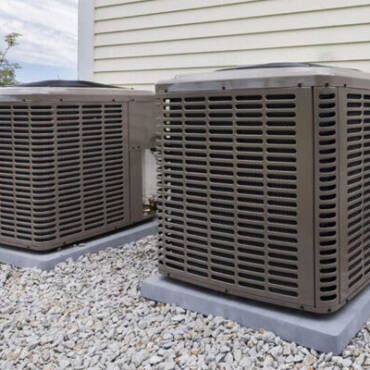
When storms knock out the lights and silence your home, a best rated standby generator will make all the difference. It provides essential heat in winter, keeps drinks cold in summer, and allows for movies on a rainy night.
However, choosing the right one isn’t always easy. Some generators simply plug in and go, while others feature easy controls and sturdy engines designed for years of reliable operation.
The best generators don’t just work – they seamlessly integrate into your life, starting up without fuss to keep your fridge running and protect your home from unwanted surprises. To assuage your household concerns, you should prioritize a unit that puts your needs first, focusing on what truly matters to your family.
For most families and couples, the list includes reliability, quiet running, hassle-free setup, and long-term support, rather than just flashy specifications. A great generator lets you sleep through a storm without worry.
First off, you’ll want to pick a model with simple controls and reliable power, and power outages won’t bother you anymore. Your home can remain bright, safe, and comfortable. Investing in the right system ensures your life keeps moving, no matter what’s happening outside.
“Selecting the right backup power generator involves a thoughtful assessment of factors like power capacity, fuel type, generator portability, start mechanism, run time, noise levels, environmental impact, voltage requirements, transfer switch compatibility, and maintenance needs,” states PC Inc. Power. “Each element plays a crucial role in tailoring your choice to your specific requirements. Remember, the overarching goal is to choose a generator that aligns seamlessly with your power needs and lifestyle, ensuring reliability and peace of mind in any situation.”
Capacity and Sizing of a Best Rated Standby Generator
The kilowatt size behind any best rated standby generator indicates its actual power output, while its kVA rating measures the total load it can support, including technical factors beyond basic power needs. Choosing the right size is crucial: an undersized generator risks overloads or system failure, whereas an oversized one wastes fuel and money.
To determine the appropriate size, start by listing everything you need to power during an outage. For each large appliance, identify its starting wattage – calculated by multiplying starting amps by volts. Keep in mind that most American homes use roughly 30 kilowatt-hours per day on average.
A smart approach is to choose a generator that’s at least 20 percent larger than your maximum usage. This extra cushion helps the machine run smoothly without being maxed out and provides wiggle room for unexpected power spikes.
For instance, a 22 Kw generator often provides full backup for many homes. If you aim to power most items on a 200-amp panel, models between 27 Kw and 36 Kw can typically cover about three-quarters of the load.
For true whole-home backup, a 48 Kw model might be necessary, as it can deliver up to 220 amps at 240 volts, keeping everything online. Smaller homes usually find that generators in the 10 Kw to 18 Kw range are sufficient for essentials like lights, refrigerators, and heating or cooling.
Don’t assume every “whole house” label means it covers every device. Your specific setup matters. Some newer generators utilize clever technology for managing high loads, like briefly switching off air conditioning to prevent system overwhelm.
“The country’s electricity demand, which was stagnant for over a decade, is now forecast to jump nearly 16% by 2030, requiring an additional 250 billion kWh of capacity to keep the lights on,” according to Utility Dive.
What ‘Best Rated’ Actually Looks Like
The consistent ability of any best rated standby generator to start and run when needed is important. It’s all tied to engine quality, a robust construction, and diligent, professional maintenance:
| Factor | Description |
| Optimal Power Quality | Provides stable, “clean” power (pure sine wave with precise voltage regulation, ideally digital) and appropriate surge protection for sensitive electronics and medical equipment. |
| Fuel Versatility and Efficiency | Offers convenient and cost-effective fuel options (natural gas, propane, multi-fuel) with advanced engine technologies for greater efficiency and reduced emissions. |
| Quiet Operation | Minimizes auditory disruption, enhancing comfort and maintaining neighborhood harmony during extended outages. |
| Automatic Functionality and Smart Integration | Features seamless, automatic power transition via an Automatic Transfer Switch (ATS) and remote monitoring capabilities for intelligent management. |
| Brand Reputation and Comprehensive Warranty | Backed by a strong brand, robust warranty, and reliable network of certified installers, ensuring long-term support and quality. |
A Best Rated Standby Generator is Built to Last
A dependable best rated standby generator stands out because it reliably turns on every time the power fails, thanks to its strong build and quality materials, particularly a solid engine. Regular maintenance is key to keeping everything running smoothly.
The kind of engine a generator uses significantly impacts its performance. While portable models often employ weaker, lawnmower-style motors, larger standby generators, designed for extended outages, perform better with liquid-cooled engines. These engines stay cooler, run quieter, and require less frequent attention, though they are more complex to repair.
Air-cooled options are more affordable, but liquid-cooled types offer superior longevity and quieter operation, making them popular for those seeking less hassle and greater comfort.
Leading manufacturers use robust, commercial-grade engines and maintain stringent quality control, with every unit undergoing rigorous factory testing. Weatherproof steel covers further protect the machine from rain, snow, or summer heat once installed outside your home.
With proper care, installers estimate a long lifespan for these units. Many generators operate smoothly for 20 to 30 years, significantly outlasting the typical 10-15 years of most portable models. Their engines are designed to run for 1,500 to 3,000 hours before significant wear, with some owners reporting 15-year-old units still working perfectly.
While manufacturers boast near-perfect reliability, actual performance hinges on how well you maintain the generator. Well-maintained machines start on command 99.8 percent of the time, whereas neglected units drop to a 98.3 percent success rate, studies show.
During longer outages, well-kept machines average over 1,600 hours of operation before issues arise, compared to a mere 61 hours for poorly maintained units. This performance gap widens in real-world scenarios, with serviced generators maintaining operation 99.1 percent of the time during a 12-hour event, while poor maintenance drags that down to 80.5 percent.
Fuel Types, Efficiency, and Aligning With Values
Choosing the right fuel for your best rated standby generator is important, as it impacts ease of use, ongoing expense, environmental footprint, and your readiness during a blackout. Natural gas is a popular choice for many homeowners because it connects directly to the home’s supply, eliminating the need for fuel cans and the worry of running low mid-storm. It also burns cleanly with minimal fumes or noise.
However, there’s a significant drawback: if a major storm disrupts gas lines, your generator will be silent when you need it most.
Propane offers independence, as you can use portable tanks or install a large fixed one outside. It maintains its quality over time, so there’s no rush to use it, and it burns cleanly without polluting the air around your home. While it can’t match the power density of diesel or gasoline, its excellent storage life and cleaner burn make it a top choice for those who don’t run their generator frequently.
For maximum flexibility, some homeowners opt for tri-fuel generators, which can switch between gasoline, propane, or natural gas, providing alternative options if one fuel becomes unavailable. While diesel still offers the most power per unit of fuel, natural gas often proves more cost-effective over time, especially with newer engines designed for greater fuel efficiency.
Ultimately, selecting a generator fuel isn’t just about the numbers; it’s about ensuring you’re prepared for rough patches. With new options emerging and a growing focus on environmental impact, finding a backup power setup that aligns with your values and priorities is more important than ever.
A Quiet Best Rated Standby Generator: ‘Guardian’ Options
Noise is a significant factor when choosing a best rated standby generator, as nobody wants a roaring engine outside their window during a blackout.
Decibel levels vary widely across different brands and types, with some generators barely whispering. Solar and battery-powered models are the quietest, humming softly due to the absence of an internal combustion engine.
Among fuel-powered options, inverter generators stand out for their quieter operation, typically producing around 66 dB (decibels). This is noticeably less than traditional open-frame generators, which often reach 76 dB, a substantial difference, especially in residential areas.
For instance, some dual-fuel inverter options emit only 61 dB at low load, comparable to a dishwasher running. Generac’s Guardian series generally operates between 61 and 67 dB, with some newer models dropping to approximately 58 dB.
Other brands, models, or options can promise 65 dB or less, while some lines run near 66 dBA from just 23 feet away. Still, for homeowners seeking ultra-quiet performance, some options claim 62 dB. It’s worth noting that others at the far end of the spectrum can exceed 80 dB, which is almost as loud as a police siren.
Placement significantly impacts noise levels, and positioning a generator near concrete can amplify sound due to reflection, whereas grass and soft surfaces help absorb it. Many modern generators incorporate extra insulation to reduce noise. Furthermore, keeping the equipment away from sleeping areas can greatly improve comfort.
Local regulations also play a role, as homeowners associations and city ordinances may restrict generator placement or permissible noise levels. Adhering to these rules is crucial to avoid fines and complaints. As design continues to evolve, companies are increasingly focusing on integrating equipment seamlessly into your yard, making it less of an eyesore and less of a nuisance.
Automatic Operation and Transfer Switches
At the end of the day, a best rated standby generator is exceptional because it operates fully automatically. The Automatic Transfer Switch (ATS) manages everything, so you won’t have to worry during a blackout.
When the power drops, the ATS immediately detects the outage and signals the generator to start. Within seconds, your home’s wiring switches from utility power to the generator, quickly restoring lights and comfort indoors, regardless of external conditions.
This automatic operation provides immense peace of mind, eliminating the need to fumble outdoors in a storm or navigate a pitch-black house. Individuals relying on medical equipment, such as CPAPs, can rest easy knowing power will return swiftly, sometimes within 15 seconds, a speed that can be crucial. Once utility power is restored, the ATS detects it, switches your home back to the grid, signals the generator to cool down, and then shuts it off, all without any intervention.
Beyond convenience, the ATS serves a vital safety function. It monitors both the main utility supply and your generator, verifying their voltage and frequency before making any switch. It prevents electricity from flowing backward into utility lines, a dangerous condition for workers repairing the grid during an outage.
Most generators now include an ATS automatically, but it’s wise to double-check before purchasing. If it’s not included, plan for a separate purchase and professional installation. The ATS isn’t merely an accessory – it transforms a basic generator into a hands-off, set-it-and-relax system, making it a modern, automatic backup solution.
Homeowners appreciate this level of automation, as knowing their power won’t go out, even when they’re at work or asleep. For families in storm-prone regions or those with health concerns, the reassurance often justifies the cost, making a standby generator feel less like a luxury and more like a smart investment.
Protecting Your Tech: Best Rated Standby Generator Power Quality
Today’s homes are filled with gadgets, from TVs and computers to medical tools, all requiring steady, clean electricity from any best rated standby generator. Fluctuating voltage can lead to fried circuits, ruined components, and even safety risks.
While generators keep the lights on, their engines can sometimes produce unstable power, and these voltage swings aren’t just an inconvenience. They pose a direct threat to your expensive electronics.
This is precisely where a voltage regulator becomes essential, as its primary job is to maintain a constant voltage. Analog regulators typically keep power within plus-or-minus 1 to 2 percent of the target, reacting in about 10 to 20 milliseconds.
Digital models offer even greater precision, with accuracy up to ten times better and corrections made in just a few milliseconds. Some advanced digital regulators even allow you to set protection levels or log electrical issues for later review.
Most modern electronics, particularly laptops, TVs, and important medical equipment, demand a smooth, steady current and are unforgiving of “messy” power. While some generators produce power with almost no distortion, others — especially certain open-frame types — might generate “dirty power” that sensitive devices will reject.
Also, Total Harmonic Distortion (THD) is something to be aware of, since high THD can damage sensitive gear. Most smart home devices won’t tolerate anything above 5 percent, and while inverters can handle a bit more, they still have limits. For extremely delicate equipment like medical technology, a pure sine wave is necessary.
Consistent voltage isn’t the only concern, as power surges can be just as damaging as sags or dropouts. Effective surge protection between your generator and devices is vital. Series mode protectors are ideal for handling sudden spikes, whereas shunt types are less effective, especially since portable generators rarely have proper grounding.
Today, simply supplying power isn’t enough. The quality of that power truly distinguishes superior generators.
Making the Right Choice for Your Generator Investment
Choosing a best rated standby generator isn’t a simple decision, as it requires careful consideration of your family’s actual power needs and the overall cost, including initial purchase and ongoing upkeep. Different priorities, such as noise levels or specific fuel types, also play a role, making it essential to take your time before buying.
“Although the use of generators as a backup power source during power losses is commonly recognized, many people mistakenly interchange the terms ‘emergency generator’ and ‘standby generator’ when describing the equipment relied upon to safeguard critical facilities and processes,” states Unified Power USA. “In fact, emergency generators are classified quite differently than standby systems. While both emergency and standby power systems operate on fuel to create the electricity needed to power specific loads, the two types of generators serve different purposes.”
While generators have a significant upfront cost and require maintenance, the benefits often outweigh these expenses. You’ll experience less worry during storms, avoid stressing over spoiled food, keep your electronics safe, and ensure home businesses don’t come to a halt. A generator can even increase your home’s value.
You can’t just pick any generator. Plan the installation carefully, and commit to a consistent maintenance routine. Reliable care ensures your generator will function precisely when you need it most, transforming a scary blackout into nothing more than a dull evening.
Overall, buying a standby generator feels less like a splurge and more like safeguarding what matters most, because the peace of mind it offers truly lasts longer than any outage.
W. Danley Electrical
W. Danley Electrical is a champion in best rated standby generator options. We execute the backup standby generator process from beginning to end. We prepare you for your installation, as well as obtaining permits, inspections, and assisting with repair and maintenance.
We also help you optimize and fine-tune your situation to determine the correct generator size. Get the most out of your investment. Contact us today.